Home › Exterior Waterproofing
Exterior Basement Waterproofing in Barrie
The most complete fix there is: excavate down to the footing, seal the wall with a waterproof membrane, and rebuild the drainage layer so water is carried away before it ever touches your foundation.
Stop water on the outside, where it starts
Every foundation in Ontario built to code is damp-proofed — a thin spray coat meant to slow moisture. It is not waterproofing, and after decades of freeze-thaw cycles and soil pressure it fails. Exterior waterproofing replaces that aging layer with a true membrane system.
The soil beside the affected walls is excavated to the footing, the wall is cleaned and repaired, and a seamless waterproof membrane is applied. A dimpled drainage board goes over the membrane so any water in the soil drops straight down to new weeping tile — which carries it away.
The result: the wall stays dry on both sides. This is the approach we recommend for chronic leaks, deteriorating block foundations and walls with a history of movement.
What a full exterior job includes
- Locates and protection
Utilities are located before any digging. Decks, A/C units, gas meters and plantings near the trench are protected or carefully moved.
- Excavation to the footing
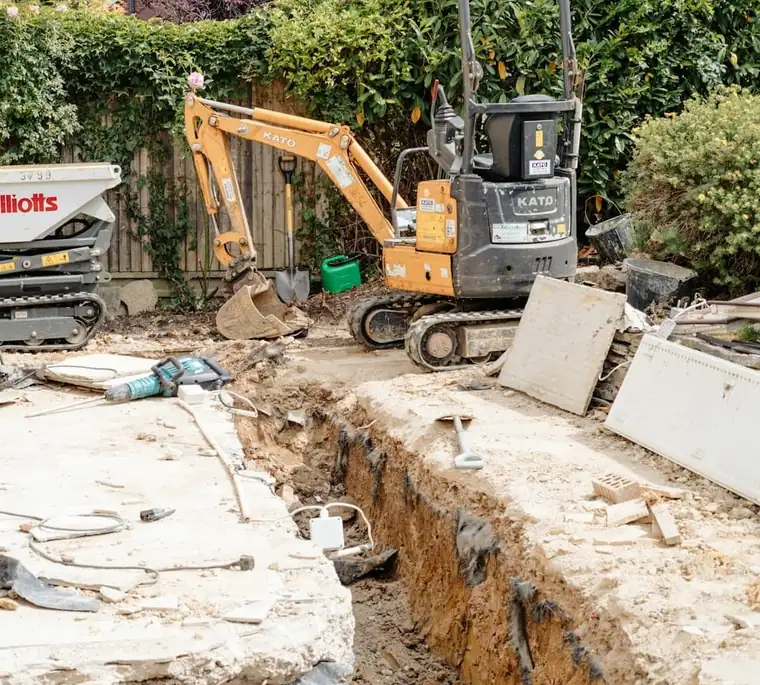
The trench goes down the full height of the foundation — typically 6 to 8 feet — along every wall being treated.
- Wall preparation and crack repair
The wall is washed and inspected. Cracks are routed and sealed, deteriorated parging is replaced, and honeycombed concrete is patched — the membrane needs a sound surface.
- Waterproof membrane
A rubberized asphalt or elastomeric membrane is applied from grade line down over the footing joint, forming a seamless barrier the wall never had.
- Drainage board
A dimpled HDPE board covers the membrane. It protects the membrane from backfill and creates an air gap: soil water falls to the tile instead of pressing on the wall.
- New weeping tile
Perforated drainage pipe wrapped in filter cloth is laid beside the footing in washed gravel, and connected to a sump pit or storm service — a working escape route for ground water.
- Backfill and grading
The trench is backfilled, compacted in lifts, and finish-graded to slope away from the house so surface water is directed off the foundation from day one.
When exterior is the right call
- Chronic seepage through the wall face — damp block, recurring efflorescence, saturation that keeps coming back after patch repairs.
- Block (masonry) foundations. Hollow-core block fills with water internally; an interior fix can drain it, but only an exterior membrane stops the block from soaking.
- Failed or missing weeping tile. If the original footing drain is clay tile from the 60s or 70s, replacing it means excavating anyway — do the membrane at the same time.
- Walls showing movement. Excavation is the opportunity to repair and reinforce a bowing or cracked wall from the outside before sealing it.
- Planned regrading or landscaping. If the yard is being redone anyway, it is the cheapest moment exterior waterproofing will ever have.
What to expect
- Duration: most single-wall jobs run two to three days; a full perimeter typically takes about a week, weather depending.
- Season: excavation season in Simcoe County is roughly April through November — frozen ground stops outside work. Winter inquiries get scheduled for the first spring slots.
- Your yard: a trench means disturbed lawn and moved plantings along the wall. We keep the excavation as tight as the job allows and leave the grade clean, sloped and ready to re-seed.
- Access: tight side yards, additions and attached garages sometimes make one wall unreachable from outside. Where that happens, we combine exterior work with an interior system for the blocked section.
Not every leak needs this. A single cracked wall with a dry footing drain is usually an injection job at a fraction of the cost. The assessment tells us — and you — which situation you have.
Exterior waterproofing questions
Do you have to dig up the whole house?
No. We excavate the walls that are actually leaking or at risk. Full-perimeter jobs happen, but a targeted one- or two-wall treatment is far more common.
What happens to my deck / interlock / garden?
We plan around it during the assessment. Some structures can be bridged or partially lifted and re-laid; sometimes a section must come out — you will know exactly what is affected before you approve the quote.
How long does the membrane last?
Modern rubberized membranes with a drainage board are designed as a permanent, decades-long fix — unlike the original spray damp-proofing, the membrane is protected from soil contact and stays flexible through freeze-thaw cycles.
Is spring or fall a better time?
Both work. Spring shows us the water at its worst; late summer and fall give the driest, easiest excavation conditions. The practical answer is: before the next melt, not after it.
Often part of the same fix
Fix it once, from the outside
If your basement leaks every spring, an assessment will show whether an exterior system is the permanent answer — with a written scope and price.